Where's the Best Place for Camping Near Philadelphia Area
This small republic northwar of Russia is noted for its blue lakes, marble quarries and mountain forests filled with jumbo boulders.
1. Petrozavodsk
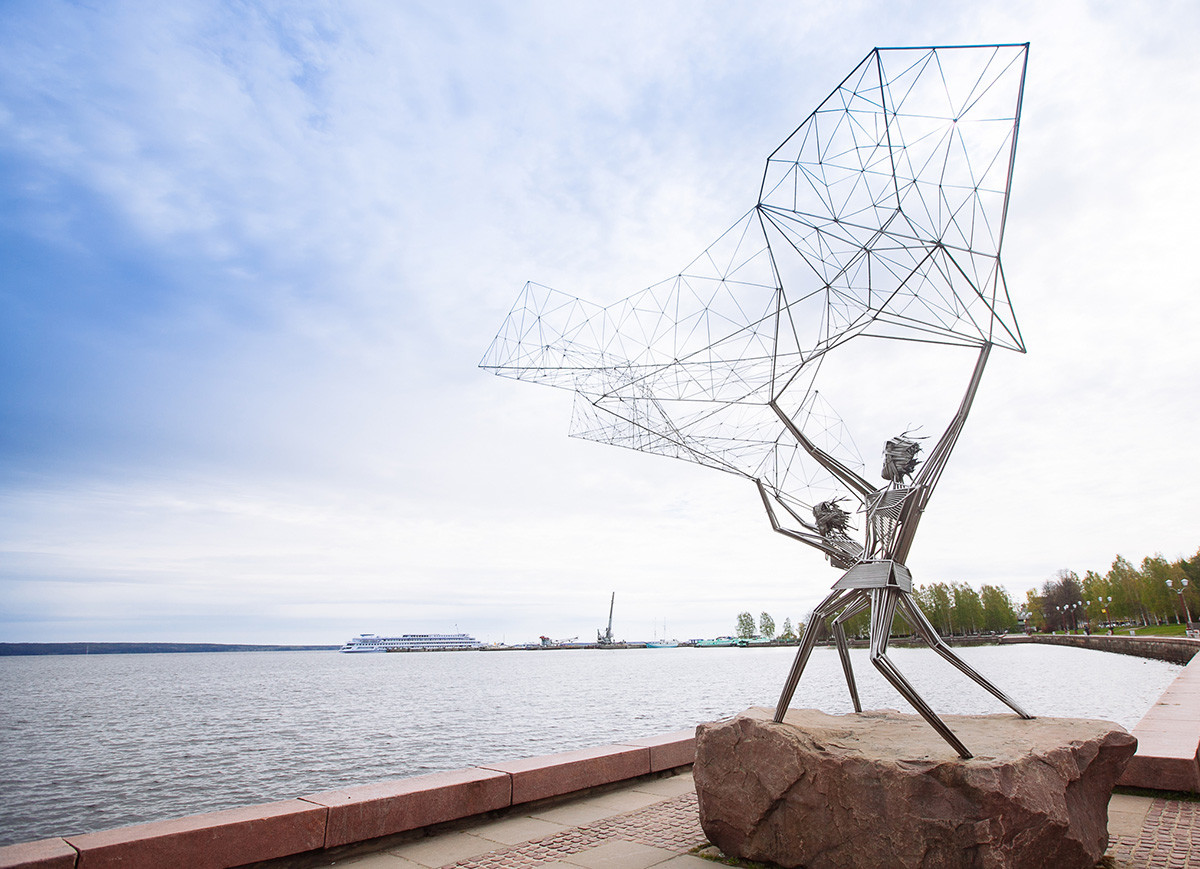
Fishermen, simbol of Petrozavodsk city, sculpt along Onega embankment, endue from American twin-metropolis Duluth.
Legion Media
The capital letter and the largest city in Karelia (with just under 300,000 people living there) is famous for having one of the most remarkable waterfronts in Russia. Onega's embankment is decorated with installations by contemporary artists from all over the world. And the sunsets here are simply unbelievable!
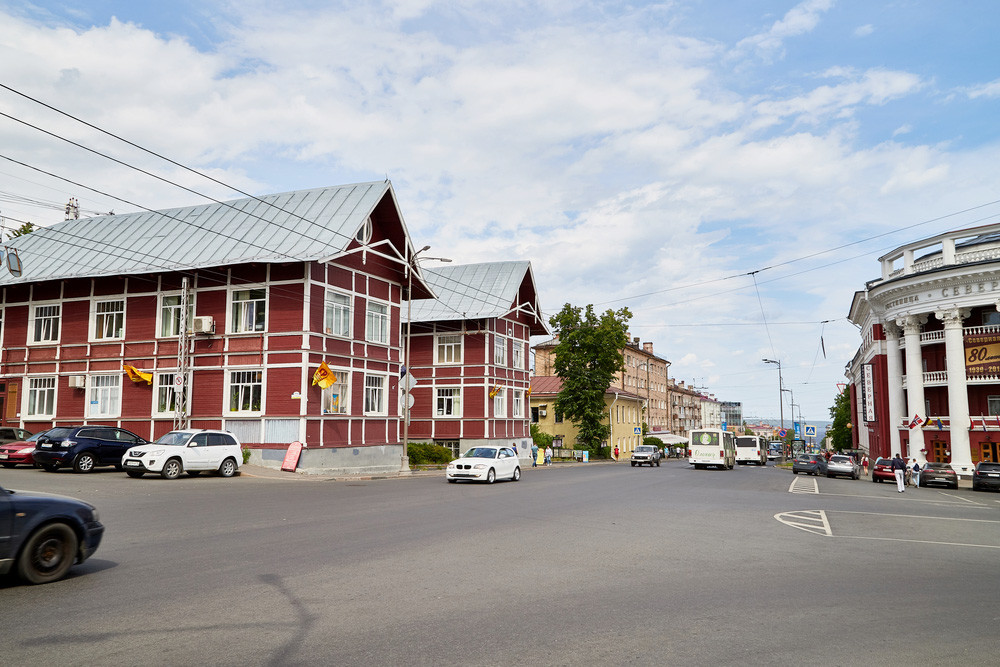
The high street in Petrozavodsk named after Nikolai Lenin.
Legion Media
Architecture enthusiasts will fall in know with the old Karelian awkward houses in City of London center, which is au fon an open-air museum.
2. Ruskeala Mountain Green
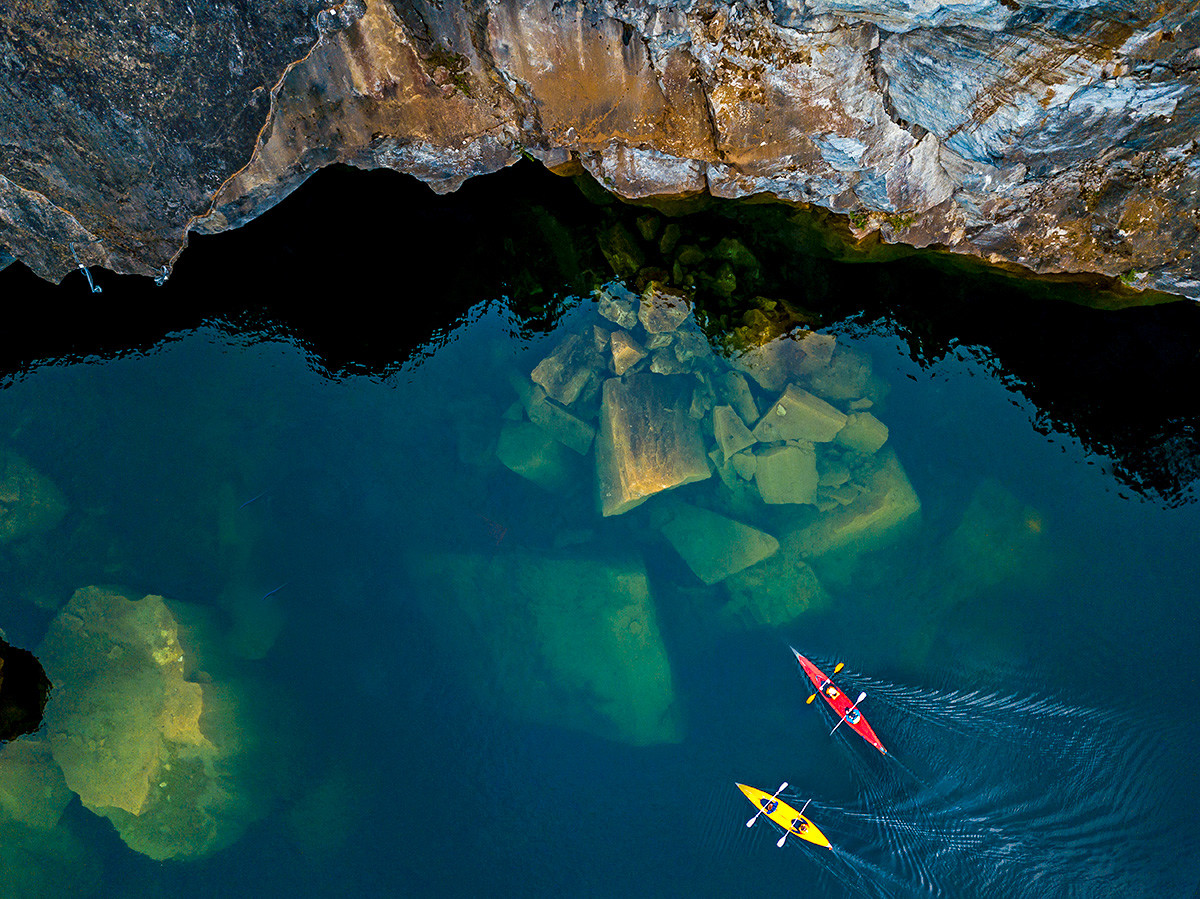
Kayakers sailing over sunken boulders in Lake Undemanding.
Getty Images
Several years ago, these abandoned marble quarries were turned into a park. Marble was well-mined here beginning in the 18th century. Ruskeala marble was secondhand in the decoration of St. Isaac's Throne and St. Michael's Castle in Peterburg, Eastern Samoa well as the City's Primorskaya and Ladozhskaya subway system stations.
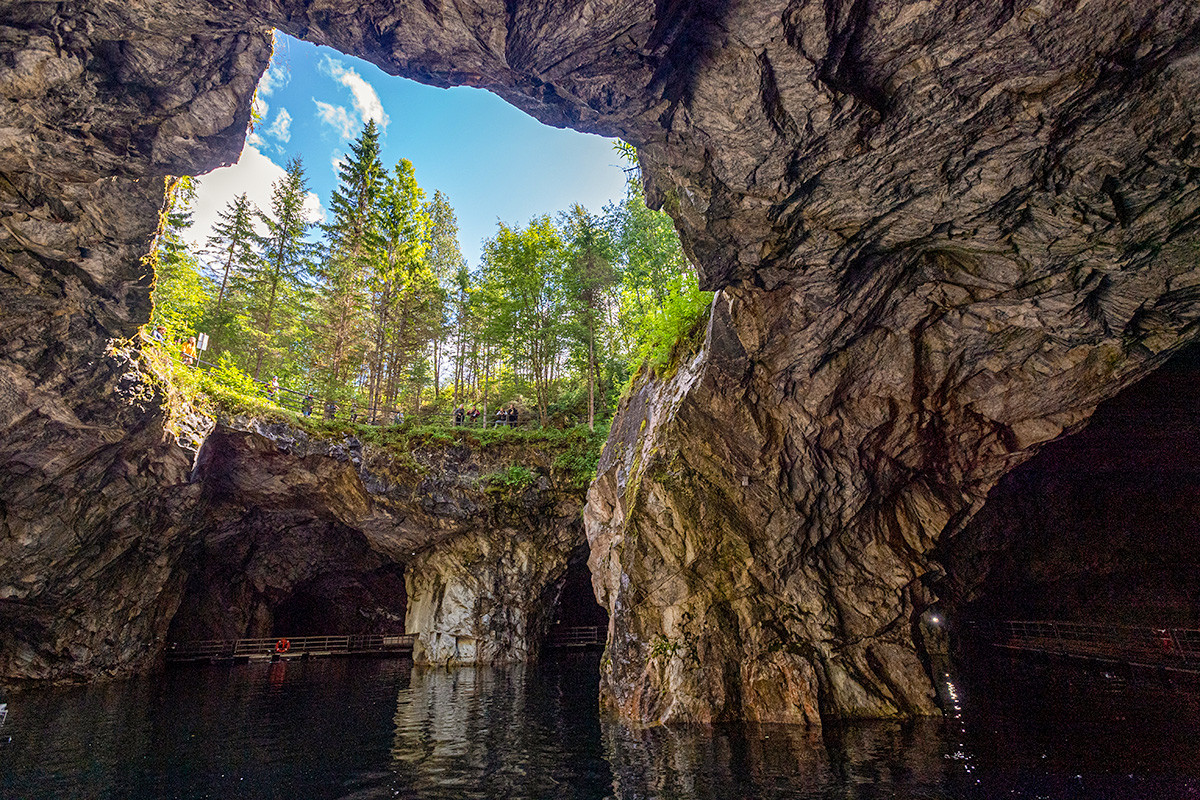
In the caves of the marble canon in Ruskeala Mountain Parkland.
Komsomolskaya Pravda/Global Look Press
The main attraction at Ruskeala Park is a big canyon filled with blue water. You can likewise visit underground tunnels.
3. Kivach Falls
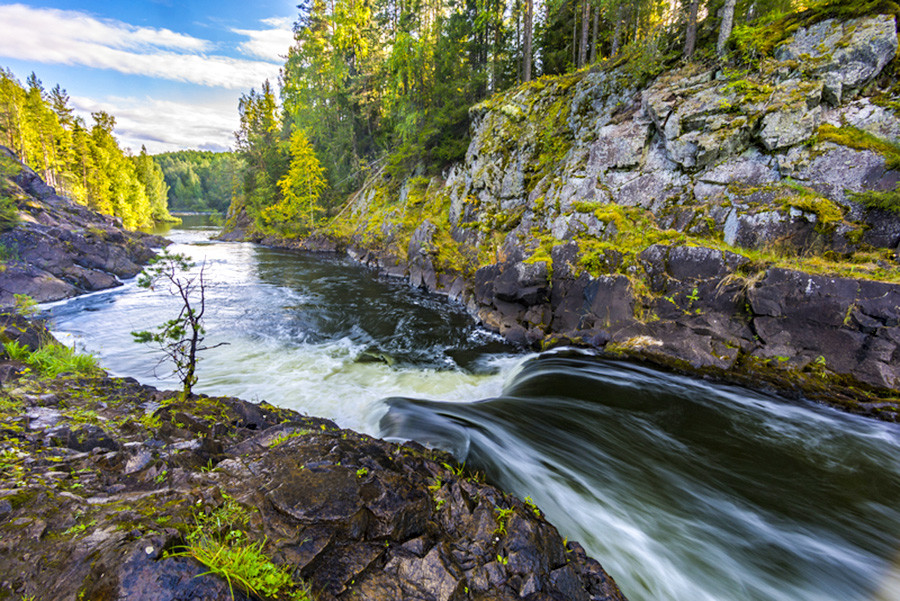
Kivach Falls.
Legion Media
This falls features prominently in some all duty tou of Karelia. It is impossible to miss! Kivach is translated from Finnish as "powerful, impetuous," which is a very fitting description of this waterfall on the Suna River. At 10.7-meters high, Kivach is the second largest plain waterfall in Europe after Rhine Waterfall in Switzerland.
4. The Girvas extinct volcano
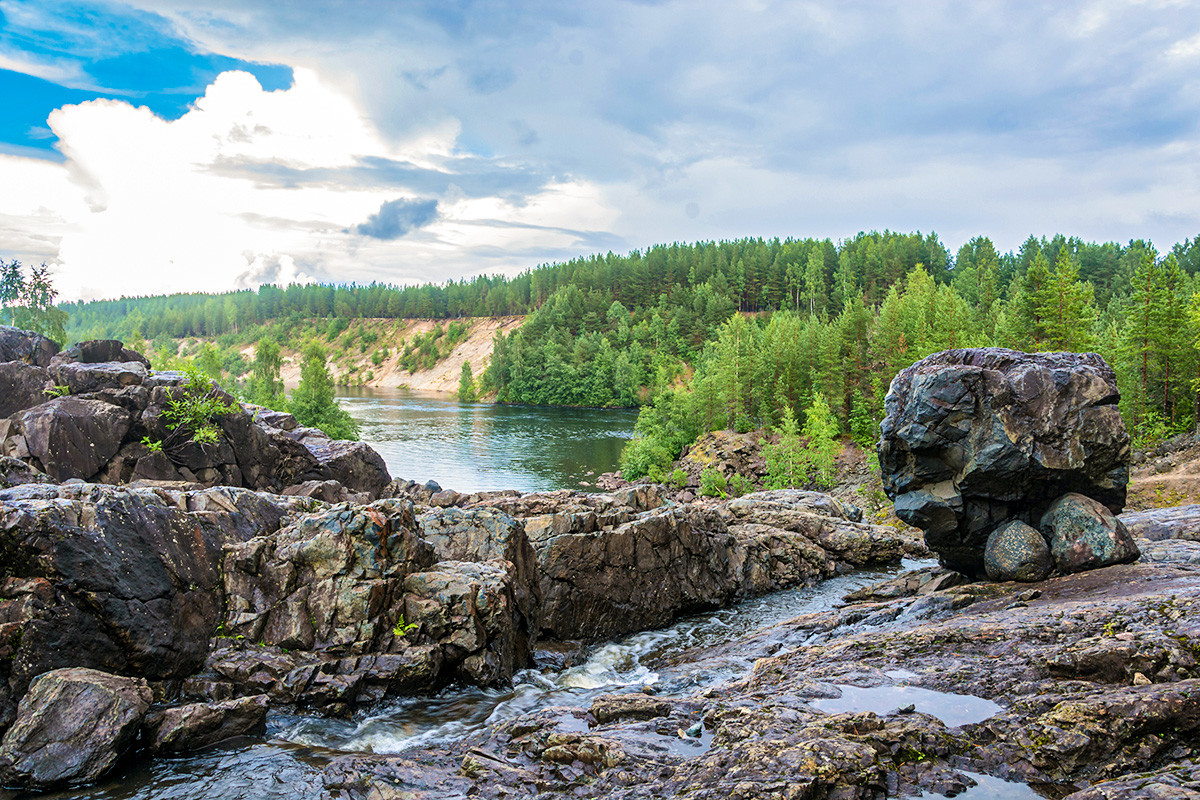
On an ancient volcano Girvas.
Getty Images
Girvas is not like whatever volcanoes we are used to. It looks like a rocky forest cut by numerous lakes and dams. But it is actually a vent, or more precisely a paleo vent, as scientists would say. It went extinct more than 2 billion days past and is considered one of the oldest happening the planet.
5. Kizhi
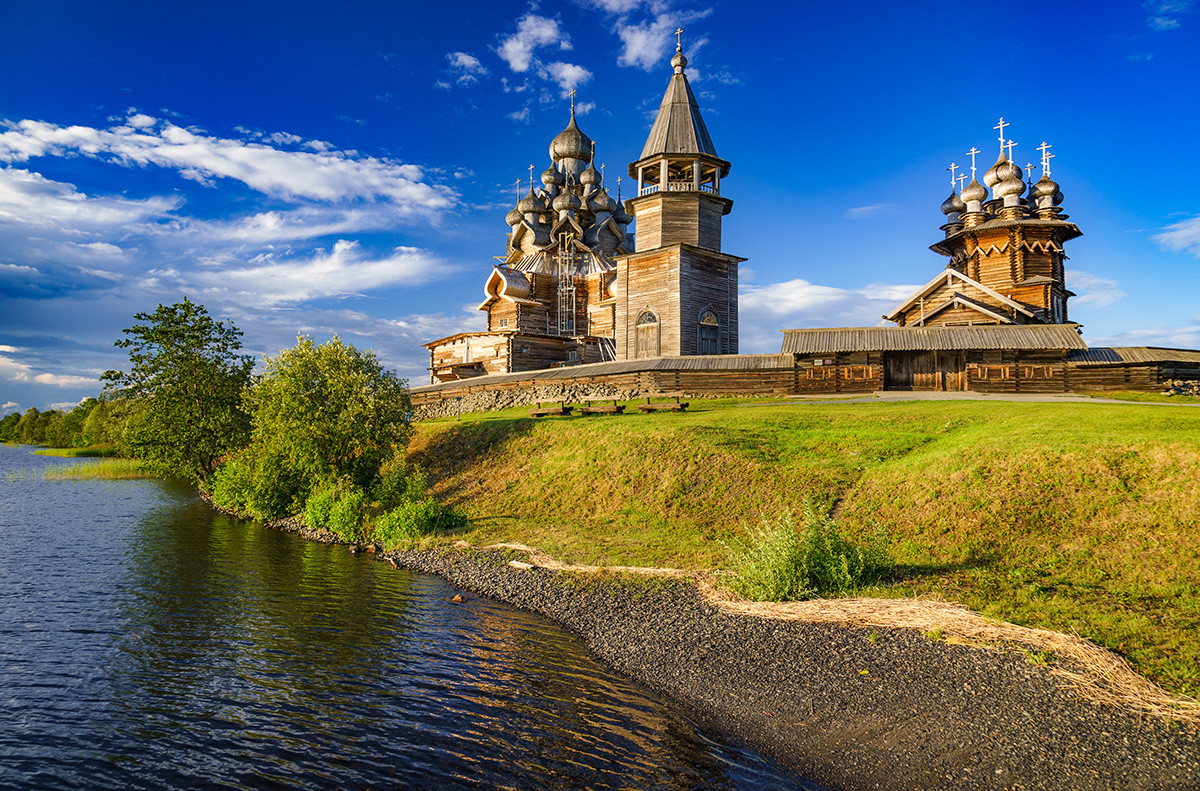
Kizhi island.
Sergey Smirnov/Global Look Press
Lake Onega has more than 1,300 islands, but Kizhi is especially worth a chatter. It is an island museum of wooden architecture and a UNESCO World Heritage Place. Medieval buildings were brought here from abandoned villages in northern Russian and restored. The heart of the ensemble is the Kizhi Pogost.
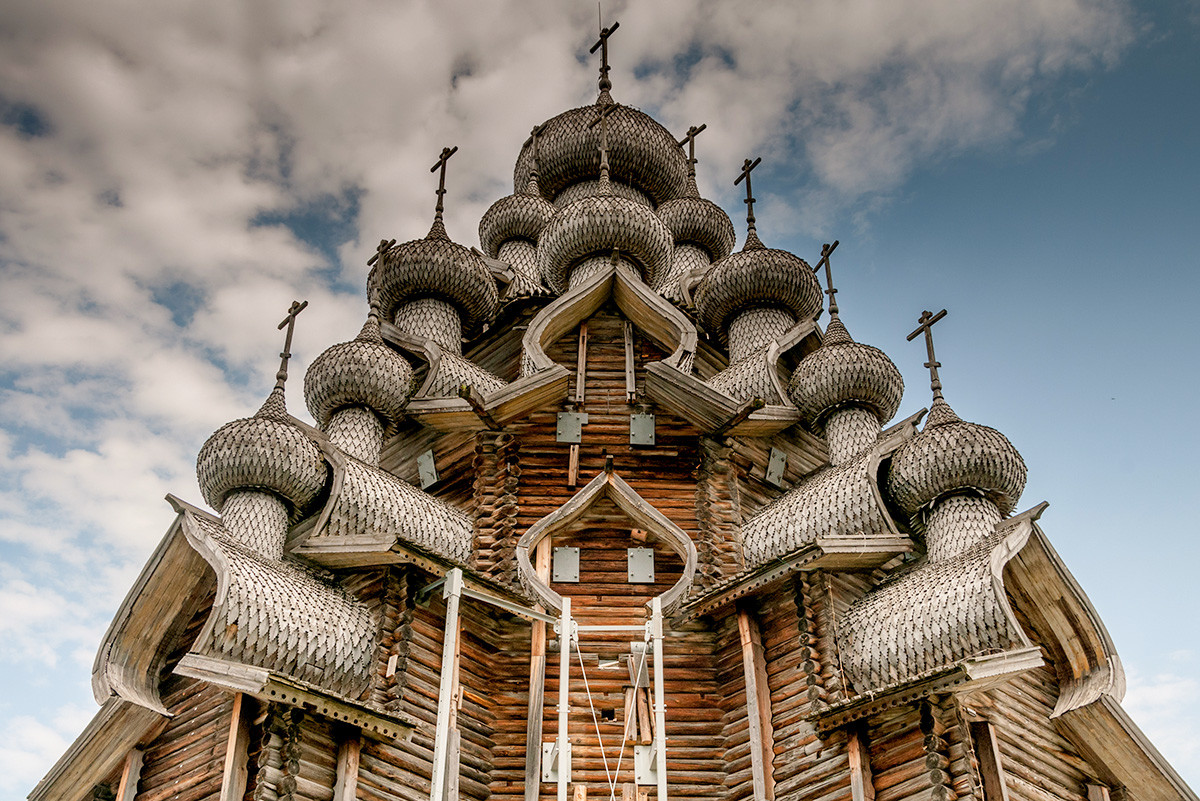
The Church of Transfiguration of Jesus built 1714 connected the Kizhi Island.
Getty Images
It consists of the 37-meter-tall Church of the Transfiguration, which was built in the early 18th century altogether from wood without a one-woman nail. Present you will also find the Church of the Intervention, which has a partially preserved iconostasis and a 19th century bell pillar.
6. Valaam Monastery
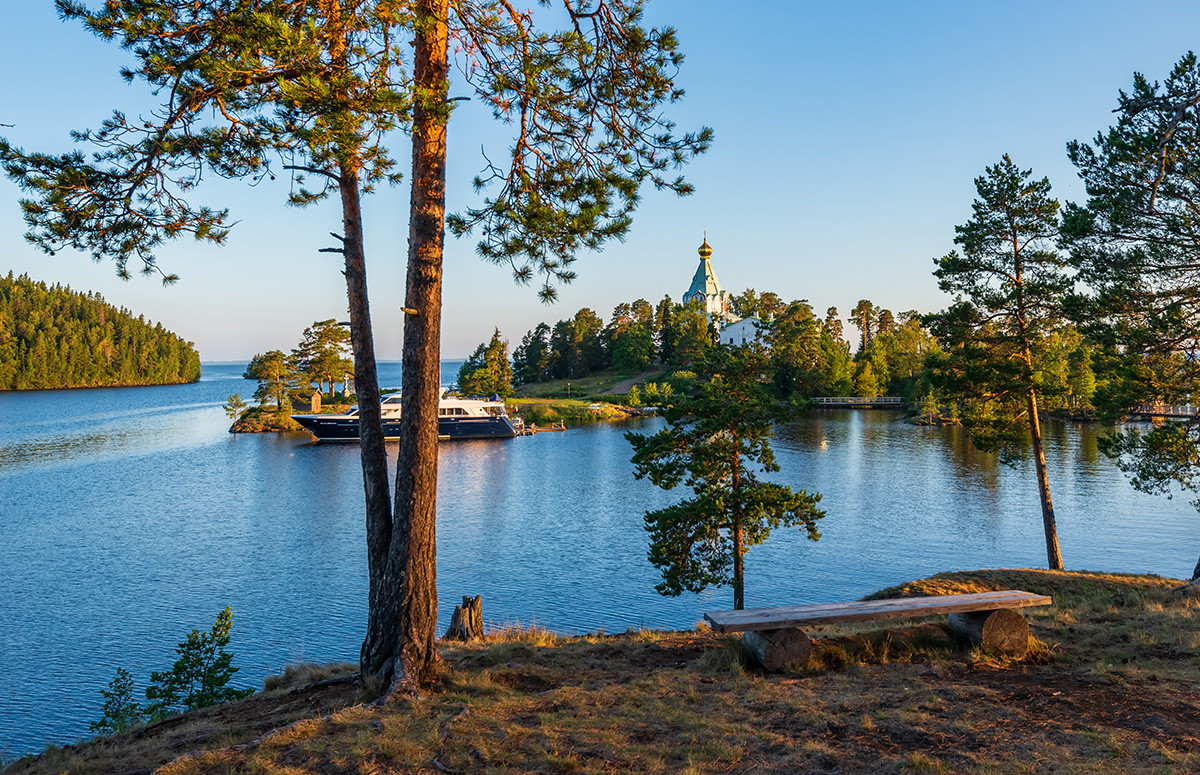
The Laurus nobilis of the Valaam Monastery and St. Nicholas Skete.
Getty Images
One of the oldest and most famous monasteries in Russia is located in the western part of Karelia on Lake Ladoga. The Monastery of the Transfiguration of Jesus of the Saviour was founded in the 11th-12th centuries on the secluded Valaam Archipelago, which consists of 50 islands. Whatever of them are and then close to from each one different that they seem like a single piece of set down, while others are Sir Thomas More remote and difficult to get to. On many of those islands, you hindquarters find secluded dwellings for monks that are named sketes.
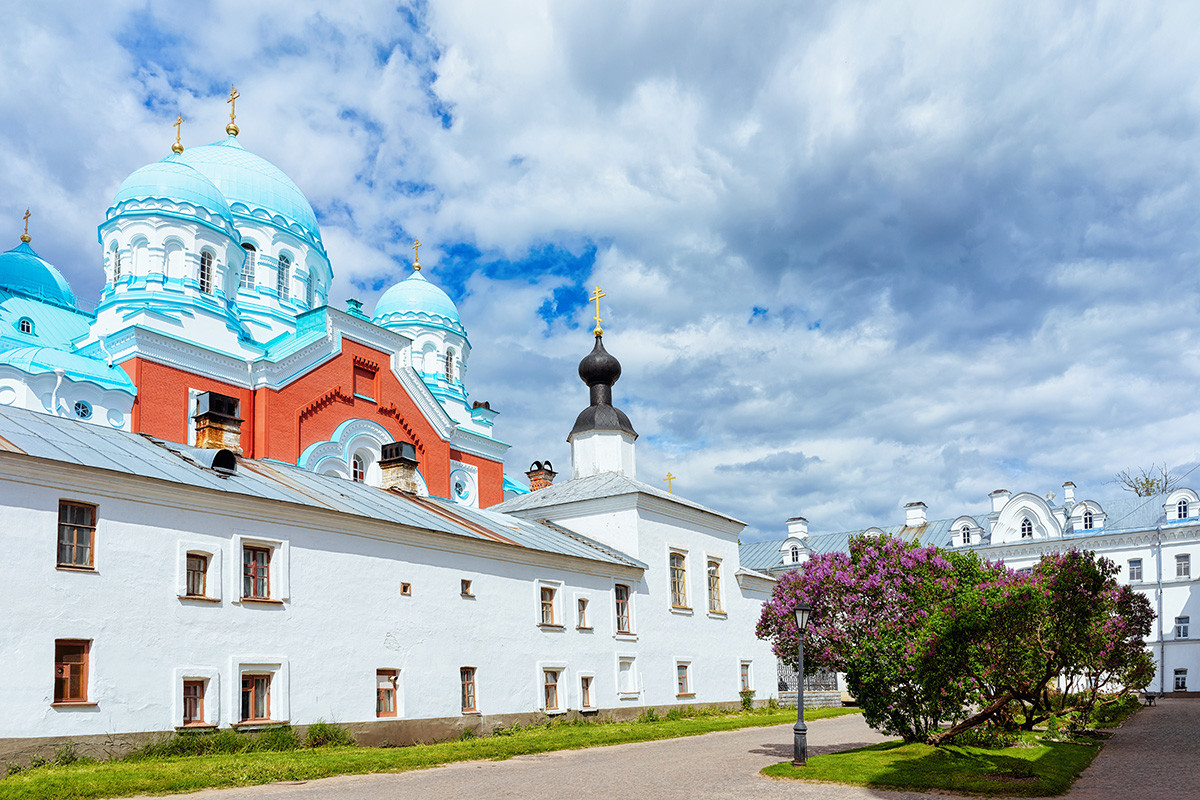
The Valaam Monastery.
Getty Images
Pilgrims and tourists come here non reasonable because of the monastery's religious chronicle, just also to go connected scenic walks around the islands.
7. Ladoga Skerries
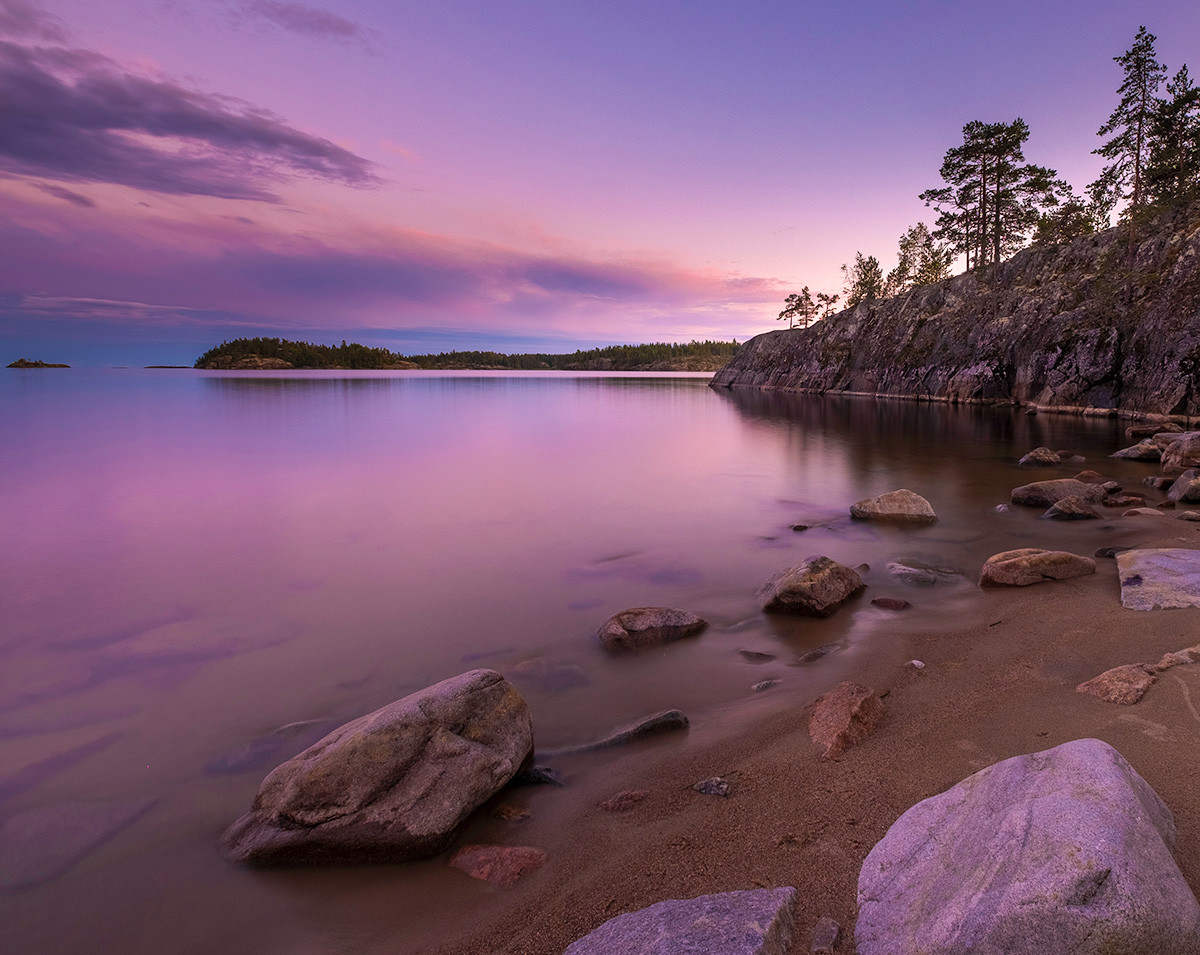
Summer evening at the Ladoga Lake.
Getty Images
1 of the most bonny national parks in USS consists of hundreds of islands, canals and bays hidden away in the dense Karelian forests. It is one of the nearly democratic sportfishing and kayaking destinations for tourists and locals alike.
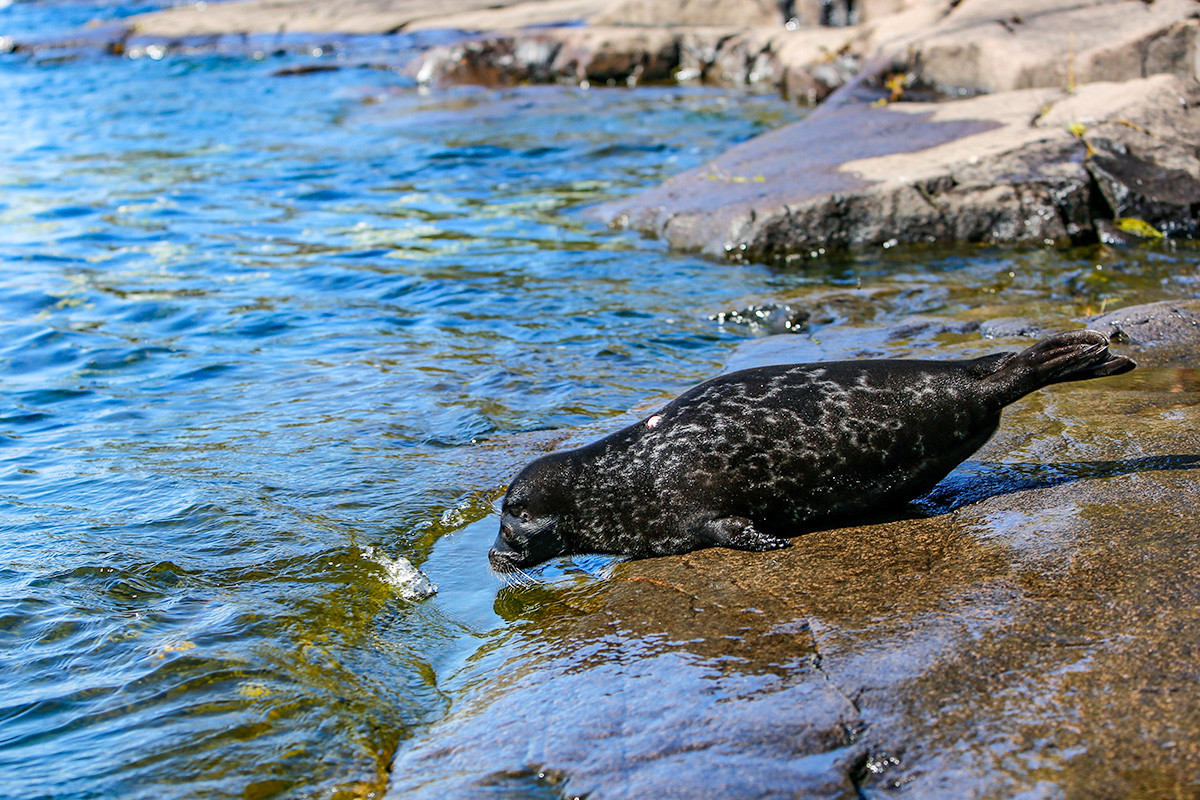
A local at the Ladoga Lake.
Mikhail Kireev/Sputnik
What's more, seals live here.
8. Colorless Deep-sea Petroglyphs
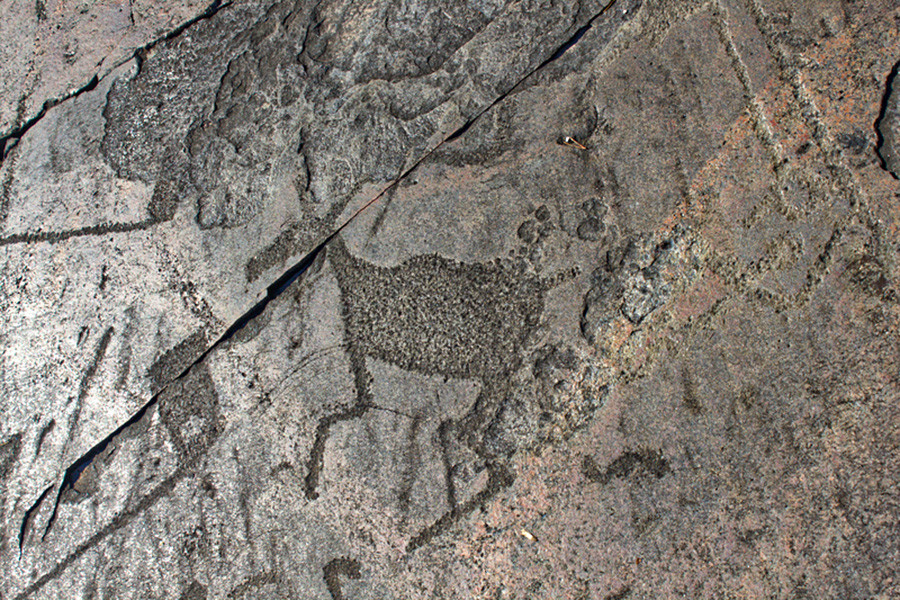
Petroglyph of a deer.
Legion Media
These carvings along rocks—messages from the great unwashe who lived in the area 5,000-7,000 geezerhood ago—are considered unitary of the main mysteries of Karelia. They can be launch all over the region, but most of all near the city of Belomorsk in the north of the democracy. There are Thomas More than 2,000 of them here, with new ones being discovered totally the time. They depict scenes from the everyday life of the ancient residents, ranging from fishing to domestic scenes. There are even pictures of people on skis!
9. Rabocheostrovsk
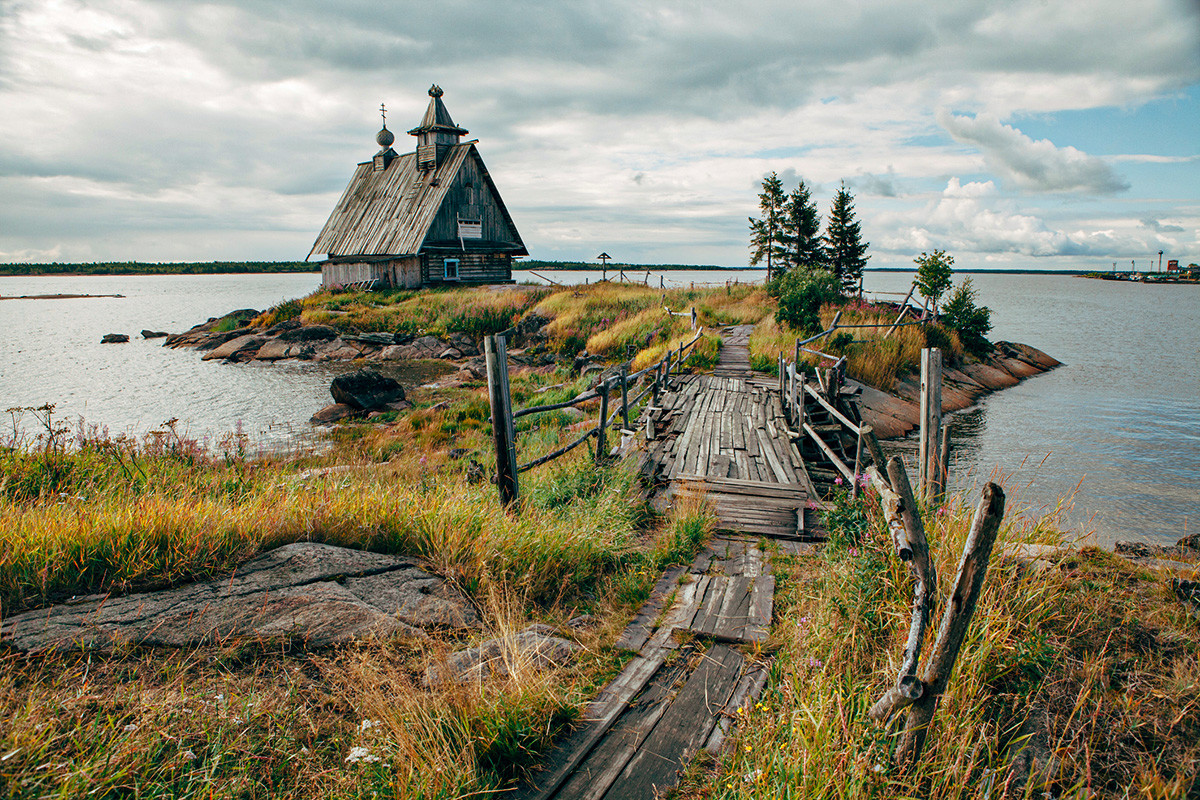
The famous vista of Rabocheostrovsk.
Host Media
In the 1920s, this old Karelian village on the shore up of the White Sea housed a theodolite prison for inmates of the Solovki prison bivouac. What remains of the old buildings today are just their foundations and a undone pier, although it still serves as a protrusive point in time for trips to Solovki.
10. Village of Kinerma
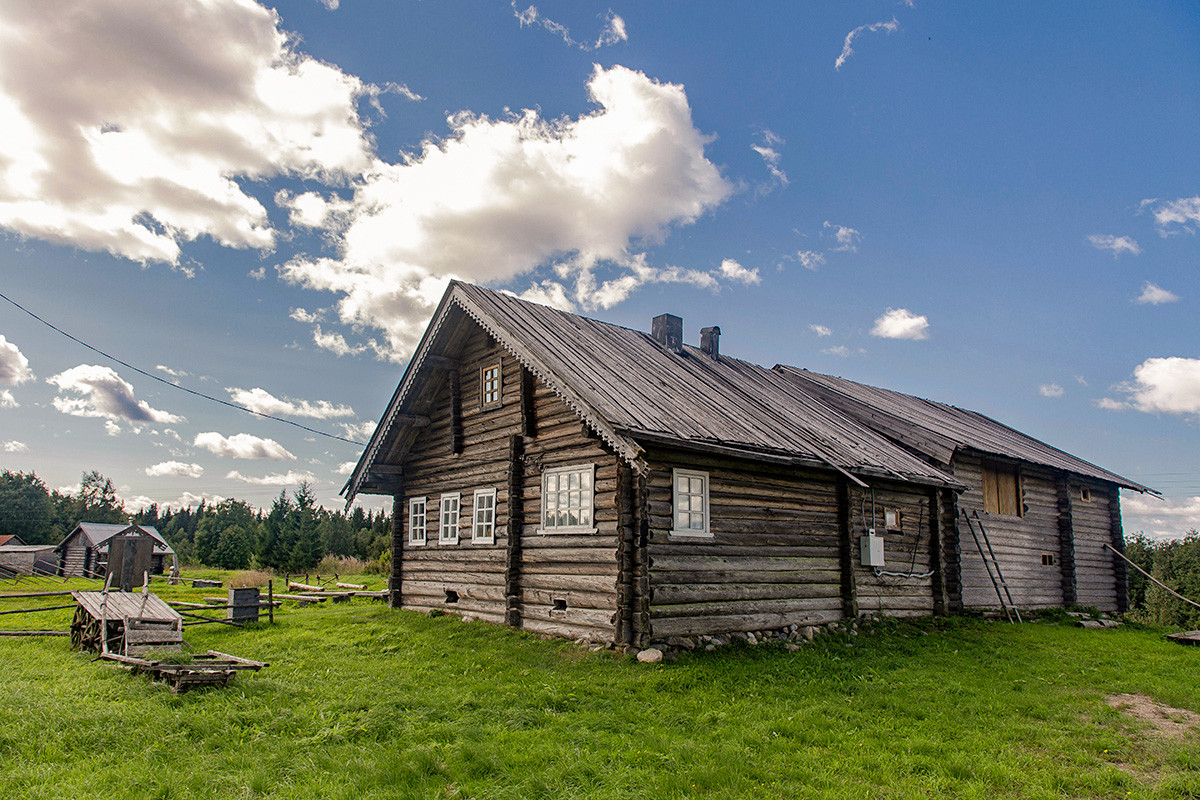
The Karelian village of Kinerma.
Legion Media
This tiny Village with a population of just six mass is a member of the Association of the Most Beautiful Villages of Russia and is considered one of Karelia's briny attractions. Kinerma has preserved the historical appearance of an old Karelian village, with real wooden houses dating indorse to the 17th and 18th centuries.
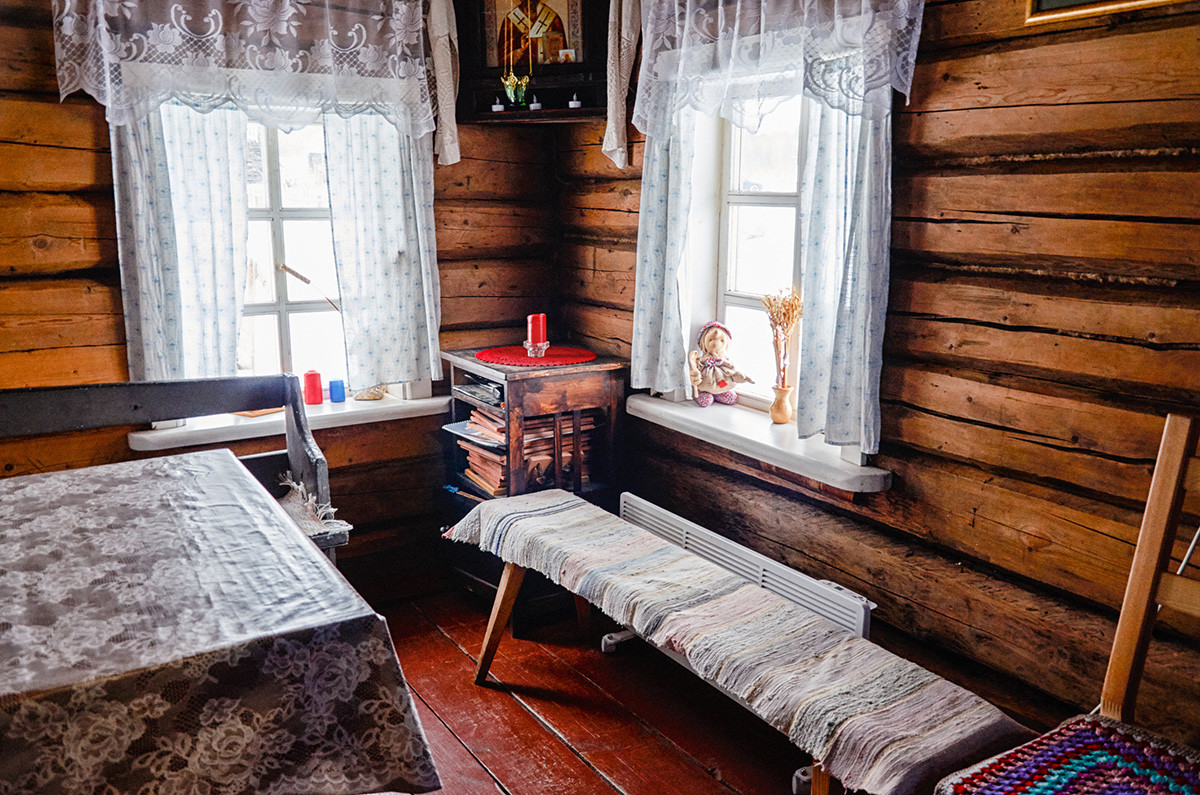
Inside a Karelian house.
Horde Media
Local residents have tack together an exhibition for tourists that introduces everyday living in a Karelian village. And, of run, all visitors are treated to delicious local pasties, known as kalitki.
If using any of Russia Beyond's content, partly or fully, forever provide an active hyperlink to the innovative material.
Get the calendar week's best stories straight to your inbox
Where's the Best Place for Camping Near Philadelphia Area
Source: https://www.rbth.com/travel/332688-visit-karelia-travel

Post a Comment for "Where's the Best Place for Camping Near Philadelphia Area"